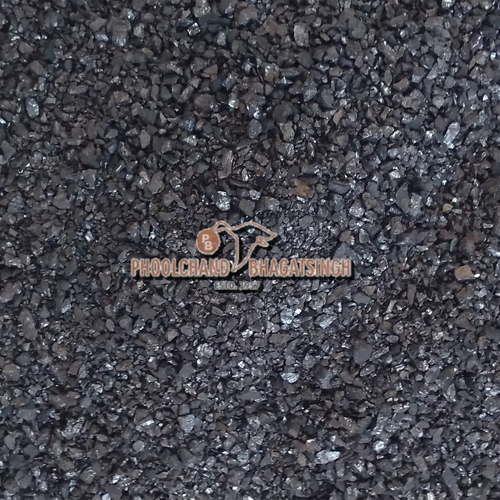
Carbon Raiser is mainly used as additive and fuel. Also known as carbon additive, calcined anthracite coal and gas calcined anthracite coal, its main ingredient is anthracite with characteristic of low sulfur and ash. More than 95% fixed carbon can be achieved by using it as a carbon additive of steel-smelting and casting.
The DC electric calciner is used for calcining Anthracite at high temperature about more 2000 degrees. This results in efficiently removing moisture and volatile matter from Anthracite. It also improves several parameters, such as anti-oxidation, density, electric conductivity and mechanical strength. The characteristics of carbon raiser are good, while it has high density, low carbon, low ash and low resistivity. It is mainly used as a raw material for carbon products. In steel industry, it is used as carbon additive.
It can be used as an alternative to the stone grinds and refinery coke, because of its low cost. The calorific value of Carbon Additive can be more than 9386K/KG, which is why it can be used as a fuel.
When in vertical shaft furnaces Anthracite is calcined under the 1240 degrees temperature, Calcined Anthracite is produced. There are many applications of the Calcined Anthracite, for instance carbon material production, removal of rust in ship building, water filtering and electric steel ovens.
Calcined petroleum coke is also used in the making of Carbon Raiser. Chemistry, machinery, metallurgy, electricity are some industries where it is used as carbon additive and intermediate reactor.
Based on the factors, like quality requirements of the steel or ferroalloy production, cost and availability of carbon products, charging carbon is selected. Coke has a relative low and consistent S/P content, high percentage of carbon content. The porous structure of coke enables hot metal to enter the small fissures and efficient devourment of its carbon content. The cost effective and easy to use Coke is considered as a best material for the furnace operation in slag foaming or in carbon adjustment.
Carbon Raiser Applications:
Metallurgical
Steel-making
Premium Carbon Content for Steelmaking
This carbon additive is engineered to improve carbon content and control impurities in steel production, ensuring consistency in metallurgy. Its superior fixed carbon level assures efficient carbon recovery and minimizes unwanted elements, such as sulfur and phosphorus, crucial for producing high-quality steel.
Versatile Forms and Custom Sizing
Offered in both granular and powder forms, sizes can be tailored between 1 and 5 mm as well as upon customer request. This adaptability allows seamless integration into varying steel production processes, ensuring optimal dissolution and distribution within melts.
Safe Packaging and Easy Storage
Packed securely in 25Kg and 50Kg bags, our carbon additive is easy to transport and store. The waterproof and robust packaging preserves product quality, prevents contamination, and supports reliable inventory management in steelmaking and foundry settings.
FAQs of Carbon Additive (Raiser):
Q: How is the Carbon Additive (Raiser) used in steelmaking processes?
A: The Carbon Additive is added directly to steel melts or ladles during the steelmaking process, where it increases the carbon percentage, aiding in deoxidation and alloy quality improvement. Its granular or powdered form assists in quick dissolution and effective carbon recovery.
Q: What are the main benefits of using this Carbon Additive in the foundry or steel industry?
A: Key benefits include high fixed carbon content (min 98%), negligible impurities (low sulfur, phosphorus, and ash), and enhanced heat value, all contributing to superior alloy yields, cleaner steel, and improved product performance.
Q: When should the Carbon Additive be introduced during the melting process?
A: The additive is typically introduced at different stages depending on plant practices, most commonly either at the beginning to adjust carbon levels or during secondary refining for precise carbon control and deoxidation.
Q: Where can this Carbon Additive be sourced in India?
A: We are importers, suppliers, and traders providing this carbon additive across India. Clients in the steel and foundry sector can source the product through our distribution network for prompt and reliable supply.
Q: What is the process for determining the required size and form of the Carbon Additive?
A: Selection of size (15 mm or as needed) and form (granular/powder) depends on the specific application, melting practice, and desired dissolution speed. Our experts consult with customers to recommend the best configuration for their operations.
Q: How does the products low phosphorus and sulphur levels benefit steel quality?
A: Low phosphorus (0.03% max) and sulphur (0.05% max) prevent undesirable inclusions and increase steel ductility and strength, ensuring compliance with demanding metallurgical requirements and end-use applications.